
Los Cabos travel guide
Whale Watching in Cabo San Lucas: Season, Species & Insider Tips
Every winter, thousands of whales travel down the Pacific to the warm waters off Baja — and Cabo San Lucas has front-row seats. Here's when to come, what you'll see, and how to do it right.
By the Coco Bay local team · Based in Los Cabos · Updated July 2026
When is whale season in Cabo?
Whales are in Cabo waters from roughly December 15 to April 15. The action builds through December, hits full stride in January, and stays excellent through March before winding down in April. If you want the highest odds of breaching humpbacks and grey-whale mothers with calves, aim for February or March.
| Month | What you'll see | Notes |
|---|---|---|
| December | First humpbacks and greys arriving | Early season, fewer boats |
| January | Humpbacks + greys; first calves | Peak begins |
| February | Peak — breaching humpbacks, grey calves | Best month, calm seas |
| March | Peak — very active | Best odds; spring-break crowds |
| Early April | Winding down; humpbacks lingering | Last chance, quieter |
The whales you'll see
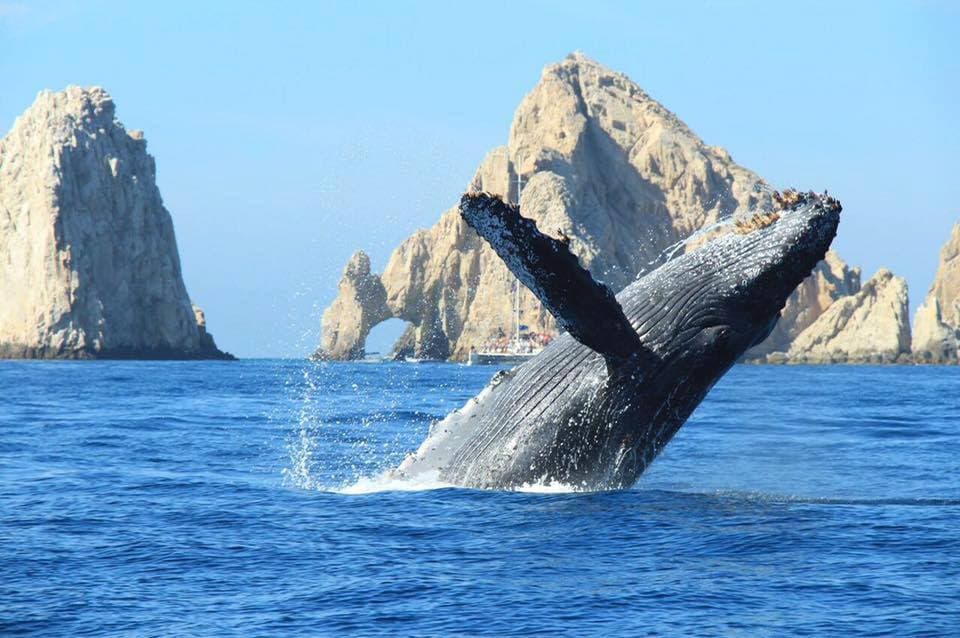
Humpback whales are the stars — the acrobats that breach, slap their tails and wave their long pectoral fins. They migrate from the North Pacific to breed and calve in Baja's warm water. Grey whales travel one of the longest migrations of any mammal, from the Arctic to the Baja lagoons, and pass Cabo with newborn calves. You may also spot fin whales and, on lucky days, blue whales (the largest animal on Earth) or a pod of orcas. Bottlenose and common dolphins show up year-round.
Where you'll see them
Most tours leave from the Cabo San Lucas marina and head out around Land's End and the Arch and into the bay and Pacific, where humpbacks are frequently sighted close to shore. The famous grey-whale calving lagoons — Magdalena Bay and San Ignacio — are farther up the Pacific coast and make a longer, full-day trip if you want to get truly close to greys and their calves. On a clear winter day, you can sometimes see spouts and breaches right from the beach or a villa terrace.
Choosing a tour
- Small boat / zodiac: gets closest to the whales; more intimate, a little bumpier.
- Catamaran / larger boat: steadier and more comfortable, often with drinks and shade — great for families and groups.
- Private charter: your own schedule and space; the concierge can arrange one to leave right when conditions are best.
- Sunrise vs. sunset: mornings usually mean calmer seas and better light; sunset tours trade some sightings for the view.
Local tip
Book a morning tour — the sea is calmest and the whales are most active — and go early in your trip so you've got a backup day if the weather turns. In peak season (Feb–Mar), reserve a few days ahead; the good small-boat operators fill up. Bring a light jacket, sunscreen and, if you're prone to seasickness, take something before you board.
Make your Cabo trip unforgettable in a private Coco Bay villa.
View all villas